

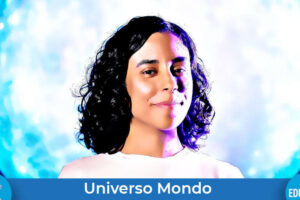
Hello and welcome to a new year with Universe World. To kick off 2026, we travel to Portugal and its oldest University, in Coimbra, to meet Joana Marques, who researches astronomy education and communication practices with a very unique focus: the emotions that we feel when we contemplate the sky.
Hi Joana, we are really curious to delve into your fascinating research! But first, tell us a little bit more about the path that led you here.
I am currently a researcher in astronomy education and communication at the Institute of Astrophysics and Space Sciences (IA) at the University of Coimbra, in Portugal. I studied physics at the same university and during my graduation years I was part of the astronomy section of the university’s students association and also worked in science centres, museums and planetaria.
After that, I worked as an educator at the Science Museum of the University of Coimbra, where I consolidated my experience in science education in informal contexts. I coordinated the education team for a year and it was an amazing experience because, in addition to the management of the team, the training and management of volunteers, the visits and the activities, I still continued involved in every step of the process, from conception, to training, execution and evaluation of the activities.
I then moved to Brazil where I did a Master and a PhD in Science and Mathematics Education. During this time I started researching informal education of astronomy. The next adventure was moving to China. While I was still finishing my PhD, me and my husband moved to Zhuhai, near Macao. In the meantime my daughter was born. I slowed down the pace but continued doing research in astronomy education.
When I secured a post-doc position at the University of Macao I started investigating astronomy education and communication using naturalist approaches and focusing on planetariums and observations of the sky. After 7 years in China we decided to return to Europe and here I am, at IA, where I continue investigating astronomy education and communication practices.
This is quite the journey! And not only across three continents but also through a variety of different roles and functions. What drew you towards research in the end?
I guess it was curiosity and passion. Working for some years in science centres, museums, and planetaria I started asking questions about how science communication works, what was the purpose, what works and what doesn’t, why? What is astronomy communication and education?
I realized I had a lot of passion for the area but no knowledge, apart from the practical experience, to answer those questions. So I decided to further study it. During my Master and PhD I got some answers, and many more questions! I became really interested in this area of research, trying to better understand astronomy education and communication, from a practical and theoretical point of view.

Your work spans practices of informal education and public engagement with astronomy: stargazing, planetaria, museums. How did you choose this particular area?
It happened in a very natural way. Informal education and communication of astronomy was always the area I was passionate about and had practical experience in. So, during my Master and PhD, it made sense to investigate this area.
I started from a broader perspective – drawing a dynamic portrait of the area in Brazil, where I was studying, and a diagnosis of its problems and possible solutions. But after doing so, I noticed that I wanted to further focus on the individual practices, and not so much on the macroscopic characteristics. Gradually I started moving in this direction. The post-doctoral position in Macao allowed me to do exactly this, and I started researching specifically the practices of observation of the sky and planetarium sessions.
I realize now that my passion has always been the observation of the sky. The more I study it, the more I think it is so important in different dimensions, and the more I become passionate about observing, helping others observing, and researching how those practices happen.
One of your latest projects revolves on emotions during stargazing and telescope observations. Tell us more about it.
Yes! This is very exciting research. First of all, everybody that conducts observations of the sky with the public knows that emotions, such as awe and amazement, are present. And it is such a joy to see people having these “wow moments”, right?
Using naturalistic methodologies, I investigated the emotions that were present in these observations. I recorded almost 20 observations, in different settings and institutions, using infrared cameras, and analysed in depth the interactions among public, mediators/educators and telescopes.

What are the most common emotions you have observed? Are they all positive?
What is clear from the data is that not all emotions expressed are positive. Despite the moments of awe, joy and surprise being prevalent, there is also frustration and disappointment involved.
The study also shows how these emotions are characterized in the interaction, how they are expressed, what triggers them, and what role they play. Furthermore, we clarify that these positive emotional moments are shared and are related to feelings of intimacy, authenticity, curiosity, engagement, reflection and contemplation while observing.
Why do you think it is so?
The universe is so captivating, so awe-inspiring. So I think it is natural that people feel awe and delight while observing the sky and while thinking about the universe and its amazing features. In particular when people observe through the telescope, there is this authentic and intimate moment with the celestial object, with the universe, that is very special and can be emotional.
On the other hand, as our research also shows (and practitioners know), the act of observing through the eyepiece is not straightforward and people sometimes struggle. Part of the frustration and disappointment originates here.
The other factor I think plays a role is the over-exposure to the wonderful images of the universe that are now available everywhere. Some people seem to expect such a view when looking through the eyepiece, and that can be disappointing. So part of the mediator/educator job is also to manage these expectations of the public. The results of studies like ours, on emotions in the observation interaction, can help educators giving them tools do manage these emotions.
That’s a very good lesson to take back home. What else can be learnt from your results and channeled back into the practice of astronomy outreach and public engagement?
To my knowledge, it is the first time a study describes and understands these practices and phenomena. It can help us better define, plan and conduct these activities, and also contributes to the training of educators/mediators. The study helps understand the characteristics of the emotions and when and how they can happen and, in that way, helps mediators in managing the emotions of the public, both the positive and the negative ones.
Our study also connects the emotional moments with curiosity, interest, contemplation and intimacy. It shows, for instance, that the emotional moments are good moments to further communicate about astronomy, answer questions and help with the wondering and contemplation. This has the potential to help the public have a more profound experience.
Observations of the sky are still very under-researched practices. These and other results about the practical methods and strategies to help observe through the telescope, manage emotions, communicate astronomical content, etc, and in general understand the different dimensions of these activities can definitely help practitioners planning, conducting and evaluating their observations.

While this study focuses on something that was never really investigated before in an astronomical setting, it does fit into a broader branch centering emotions as part of science communication research. Why do you think this has become more of a trend in recent years?
The area of research in informal science education and communication is relatively new, so there are still many aspects to explore and define. Emotions is one of them and it is definitely a trend now. Specifically in astronomy, researchers were worried about form, content and misconceptions for a long time, but more and more it is clear that emotions make a difference in learning and in the overall experience of the public. Practitioners know that for a long time, and I guess research is now catching up.
So one of the reasons for the interest in emotions is that it resonates with practice. There have also been developments in the areas of psychology, cognitive sciences and sociology of emotions, that contribute to the general research interest in the area.
Moreover, emotions have also a prominent place in the mainstream culture and social media. You can see content about emotions, emotional intelligence, emotion regulation, emotions expression, etc. everywhere.
Let’s talk about your country now: Portugal. What is the state of about astronomy research, communication and education there?
In Portugal, we have a great National Agency for Scientific and Technological Culture called Ciência Viva (Alive Science) that in the last decades had a large impact in the country, building dozens of thematic science centres. These are all connected in a network, establishing partnerships, exchanging knowledge, and supporting schools.
The Agency also fosters scientific culture and knowledge by funding diverse education, outreach and training programs. No doubt, it has revolutionized science communication and education in Portugal and, consequently, contributed to scientific literacy and a broader access to scientific culture. There are several of these centres dedicated to astronomy and many others that have astronomy content, planetariums, astronomy activities, etc. Naturally there are also other science museums and observatories, dark sky reserves, an active amateur astronomers community, and other entities dedicated to education, communication and training in the area of astronomy.
The community of astronomers and astrophysicists is also very active, and is gathered in several research institutions, the largest being the Institute of Astrophysics and Space Sciences. There is also a Portuguese Space Agency and a National Astronomy Society, and the research community is strongly involved in major international consortia like ESA and ESO. So I think we have a vibrant and diverse community.

What would you say are the major challenges for science communicators and educators in Portugal, and do they differ from what you’ve encountered in other countries?
Quick and short: time, recognition, resources.
Not just in Portugal. I feel it is like that in many other parts of the world. Things have been evolving in a positive way, but in general science communication is still seen as peripheral and is under-funded, let alone the research in the area.
Specifically in Portugal, there are two other challenges I identify. The first is that astronomy is disappearing from the formal education curriculum, which is very worrying. The second is that the community, despite being vibrant and diverse, is dispersed, and different actors and institutions would benefit if they communicated more and worked more together.
Back to your job, would you say are the most exciting and most difficult parts in what you do?
Research is not a linear activity and is composed of many different tasks. So one of the hard parts of the job is the management of time and finding time to be creative in the middle of all the little tasks and demands.
The most exciting part is exactly this creative component and the discoveries along the way. I also love staying in contact with the practice of astronomy education and with many different and inspiring people.
You are also involved in the Portuguese Language Office of Astronomy for Development of the International Astronomical Union. Tell us more about this group and its main activities.
This is an amazing group. We come from different careers and cultures and get together because we share the same language.
Because Portuguese is spoken in countries around the world, we have colleagues from Macao, Brazil, Mozambique, São Tomé and Principe, Angola, Cape Verde, and Portugal. Our aim is to contribute to the development of communities and individuals in these countries and regions through Astronomy.
This is achieved through educational programs, outreach activities, support with projects, training and other initiatives. It depends on the specific needs and aims of each partner. We also organize global activities where we can all come together and connect to the different local realities.
It is an amazing group of people, working with the spirit of sharing and respect for the differences we have. The network we have been building allows us to connect people from these different regions, and this is a very rich experience for them, both in terms of opportunities but also in terms of representation and contact with other cultures. More and more I think that the biggest richness and power we have in the world is the diversity and the capacity to dialogue and find common ground, respecting and learning from the differences. This group tries to put this in practice.

This is a beautiful image of the dynamics between the differences and the similarities that make us, that shape us into who we are. And it takes us to our final question: are there any authors, books, people or special events that influenced you along your journey?
The big inspiration is definitely the night sky. I feel that contemplating it connects me with time and space, with humanity, history, the universe and nature. It is so powerful.
I began observing the night sky and wondering about the universe in my grandma’s backyard. It was a privilege many nowadays don’t have. I hope studying the processes of observing and communicating about the night sky helps connect more people with it, and protect it. In a time of LED lights and digital screens, fast information and artificiality, observing the night, stopping, contemplating, wondering and connecting can be transformative.
On that note, a book that in the last years inspired me about this human journey of connection with the cosmos was “The Human Cosmos” by Jo Marchant. I would also highlight the book “Awe: The transformative power of everyday wonder” by Dacher Keltner, and, more related to the topic of diversity and its crucial role in the history of scientific knowledge, “Horizons: a global history of science” by James Poskett. These three books really inspired my journey.


Add Comment