
Aggiornato il 9 Luglio 2026

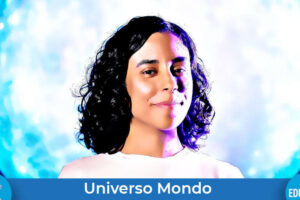
Welcome back to Universe World! We continue our journey through the countries that will experience the total eclipse of the Sun on the 12th of August, and this time we go to Spain, where we meet Nuria Álvarez Crespo, astrophysicist, lecturer and science communicator, known on social media as “una chica cosmica” (in English: a cosmic girl).
Hello Nuria and welcome to this column. Tell us a bit about yourself, your job and the path that led you here…
Currently I am a Physics professor at the university and a science communicator. I graduated in Physics and did my Master’s at the university in Madrid, and then I earned my PhD at the Università degli Studi di Torino, in Italy. Part of my PhD was also done at the Harvard Smithsonian Centre for Astrophysics. I spent a brief period at the university of Zagreb after my PhD, in Croatia, and then I worked for several years as a Research Fellow at the European Space Agency in Madrid.
What drew you towards teaching and science communication?
I always liked research, but I find it very lonely. Even when you work inside a big collaboration, everyone is so focused on their specific research that most of the job is you and your computer alone.
When I started teaching, I really liked the feeling of that social aspect of science, sharing it with other people. Before becoming a professor, I had already done a lot of outreach in science, since I am convinced that society needs to know more science, specially in times like this where disinformation is so accessible and appealing.
I think people need to know about science for several reasons, one is to cultivate critical thinking, and another really important one is they pay for it with their taxes, so they need to know why making that economic effort is so important.
You run very successful channels on Instagram, Tik Tok and Youtube about astronomy under the alias @unachicacosmica. How did that begin?
I have always been passionate about outreach, and I am convinced that we cannot wait in the universities or research centres for people to come to us. People that come to the university for outreach activities are already aware of the importance of science, and we need to make science attractive to everyone, even those who don’t know anything about it. I looked for a way to have a big impact, and today nothing matches the reach of social media in terms of connecting with such large and diverse audiences.

What are the astrophysics topics that people are most interested in on these platforms?
I cover a wide variety of topics: astrophysics, physics… Sometimes I do basic concepts, others quite advanced astrophysics. Other times history of scientists or even my opinion and thoughts about a topic.
People in general respond very well to all of them, sometimes because they hadn’t even thought about it.
How did your channels grow since you launched them, almost two years ago? Did your content and style evolve over the months?
I did not plan the growth of the channel, that has been very consistent since day one, it came as a surprise to me.
I knew nothing about social media and nothing was planned. I started doing videos because I had watched a lot of outreach, and I thought that to follow most outreach content people already needed to know basic concepts. I intended to cover that gap, taking people from the very basics to advanced topics so they don’t get lost in the way.
I never had any expectations but I am really happy people connect with my communication style. I make content about whatever feels good for me that week or questions that I have seen people asking in comments over and over again. It feels sometimes like a conversation, I cover a topic, people ask something, and that topic evolves.
Do you have a team that supports you in the social media management?
No it’s just me, I do everything: write the script, record and edit.
Despite having many followers, short content platforms don’t pay, so the only way a creator can earn income is through brand partnerships. However, it’s quite difficult as a science communicator, because there aren’t many brands interested in collaborating with creators in this field. As a result, I’m not yet in a position to afford hiring anyone.

You are also a university lecturer, how do you combine these two aspects of your professional life?
It’s really challenging. They are closely related, since outreach and teaching involve similar skills, but having two jobs inevitably takes a toll on your personal life and mental health.
At the same time, it is very rewarding, and both students and colleagues have shown interest in getting involved in the project.
You are based in Spain and this year, a total eclipse of the Sun will cross your country on the 12th of August. How are you – and everybody – preparing for this extraordinary event?
It is a fantastic opportunity to make people come closer to science, and to astronomy in particular. There are scientific events all over the country, along with coordination through different working groups. We are all very excited about it.
Do you have any tips for people planning to experience the eclipse in Spain?
If you are traveling, make your reservations in advance, as there is a lot of demand and many people will be coming to Spain for the event, so it is important to plan ahead.
The eclipse will take place at sunset, so you will need a clear view of the horizon. And of course, never look at the Sun without proper eclipse glasses.

What is the status of astronomy research in your country?
There is a vibrant community of astronomers and researchers in Spain, who continue their work despite the broader economic context, where doing science can be challenging because it is not always a political priority and funding is limited.
At the same time, we are fortunate to have some of the best observatories in the world located in the Canary Islands.
And what about science education and communication?
There is also a large community of fantastic science communicators. It is a genuinely welcoming and generous community; everyone I have met has been very collaborative. I have not experienced competition, as there is a shared understanding that we complement each other and that there is space for everyone.
In my experience, there is also a strong and growing public interest in connecting with science and learning more and more about it.
What would you say are the major challenges for science communicators and educators in your country today?
There’s a challenge that we face all over the world and we need to deal with: misinformation. Science creators are a minority on social media, because it’s very difficult to compete with facts and scientific content against the vast amount of low-quality content that dominates these platforms.
Social media rewards attention, which creates a breeding ground for charlatans, people who will say anything to profit from your attention, even lie and put public health at risk just for money. If the public has low scientific literacy or limited critical thinking skills, it becomes very easy to get lost. We need policies to address and limit this kind of harmful content and its spread.

What are the most exciting and most difficult parts of your job?
Reaching so many people is very rewarding, and 99% of them are fantastic, grateful, kind and supportive. I especially love when parents message me to say that their children enjoy my videos and are learning with me.
But that level of visibility also has a downside, negative comments, sometimes even aggressive behaviour, and unwanted attention focused on my physical appearance. It can be difficult to suddenly have to deal with such a large volume of opinions, not all of them constructive or kind.
Are there any authors, books, people or special events that influenced you along your journey?
I really like Brian Greene and the way he makes complex ideas feel accessible, without relying on the “wow factor” that some science communicators tend to use. I also enjoy Jim Al-Khalili’s books. Both Dr. Greene and Dr. Al-Khalili make science not only understandable, but also kind and welcoming, if that makes sense.
In Italian, I really appreciate Gabriele Ghisellini. I was fortunate to attend one of his relativistic physics lectures during a PhD summer school, and it was, without exaggeration, one of the best classes I have ever attended. Even in his outreach talks, he has a remarkable ability to make everything feel simple and intuitive.
Add Comment