
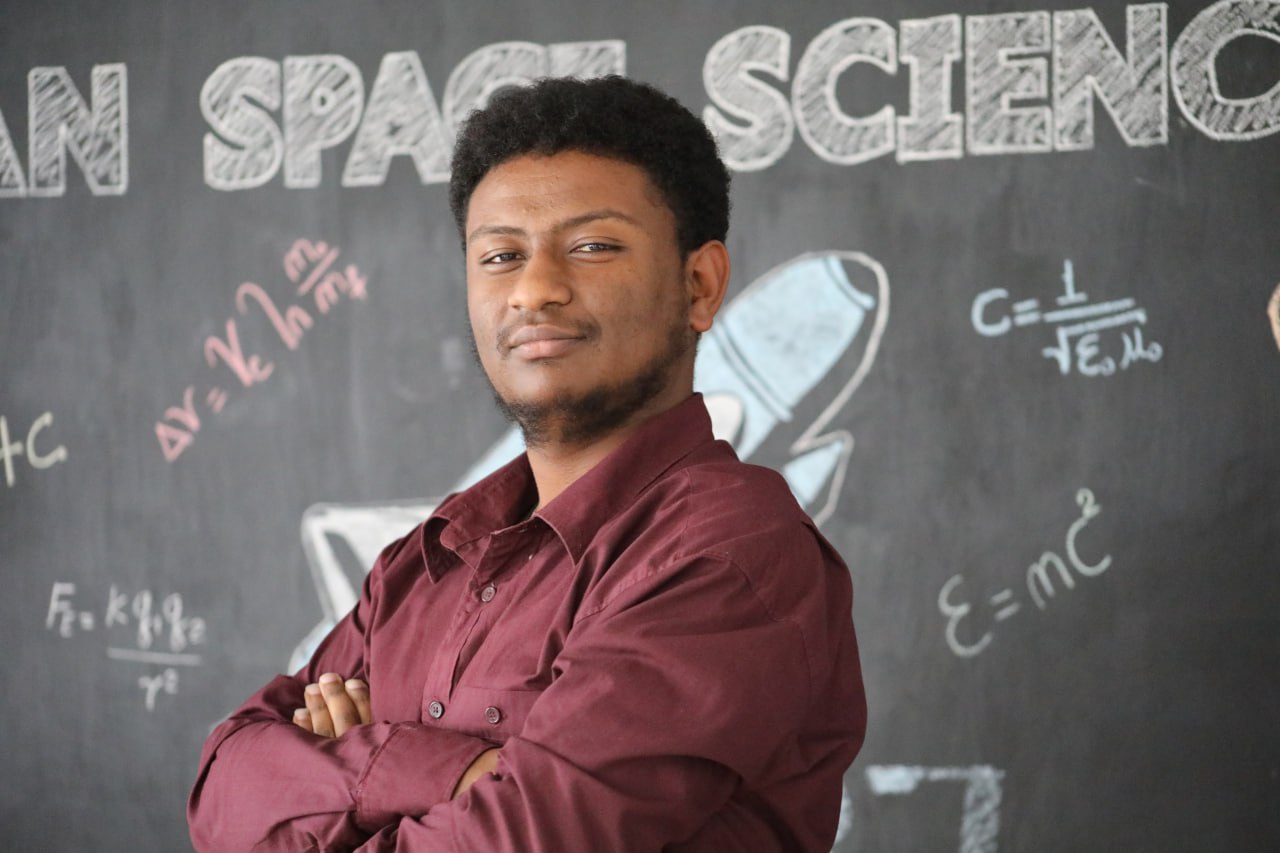
It is the final quarter of the year, and for the last Universe World interview of 2027 we visit Addis Ababa, the capital of Ethiopia. Here, we meet Kirubel Menberu, science communicator and managing director of the Ethiopian Space Science Society, who illustrates to us the joys (and challenges) of astronomy outreach in his country.
Hi Kirubel, it’s a pleasure to have you here on the pages of Universe World! Tell us more about yourself, your work and the path that led you there.
I am the Managing Director of the Ethiopian Space Science Society (ESSS) and a science communicator. My academic background is in electromechanical engineering, and I am currently pursuing my master’s degree in space engineering. I also serve as the National Outreach Coordinator (NOC) for Ethiopia within the International Astronomical Union’s Office for Astronomy Outreach.
What inspired you towards space and science communication?
My interest in this field began at a young age. I was naturally drawn to astronomy and space science. As a student, I had the opportunity to join ESSS, first as a member and later as a volunteer.
Volunteering at the society was a key step, allowing me to connect with professionals, academic institutions, and the broader space community. During those years, I developed a strong interest in science communication and astronomy outreach, realising that sharing knowledge of space with others was as important as building the technical systems that explore it. That path eventually led me to take on leadership within the organisation today.
Can you tell our readers a bit about astronomy in Ethiopia?
Ethiopia has a strong heritage of cultural astronomy. Ancient manuscripts, philosophy, and folklore show that our ancestors observed the night sky for millennia. An example of this legacy is the unique Ethiopian calendar, which runs seven to eight years behind the Gregorian calendar and features 13 months. Across various Ethiopian cultures, indigenous solar and lunar calendars have historically guided agriculture, social structure, and community life.
And more recently?
Modern astronomy in Ethiopia took its initial steps in the late 1960s with the establishment of what is now the Institute of Geospatial, Space Science and Astronomy at Addis Ababa University, accompanied by a small observatory. However, scientific momentum slowed down and remained largely dormant through the 1970s and 1990s.
A turning point came in 2004 when the Ethiopian Space Science Society was founded by professionals from Addis Ababa University, government leaders, and private sector members. They shared a conviction that space science and technology are beneficial tools for sustainable national development.
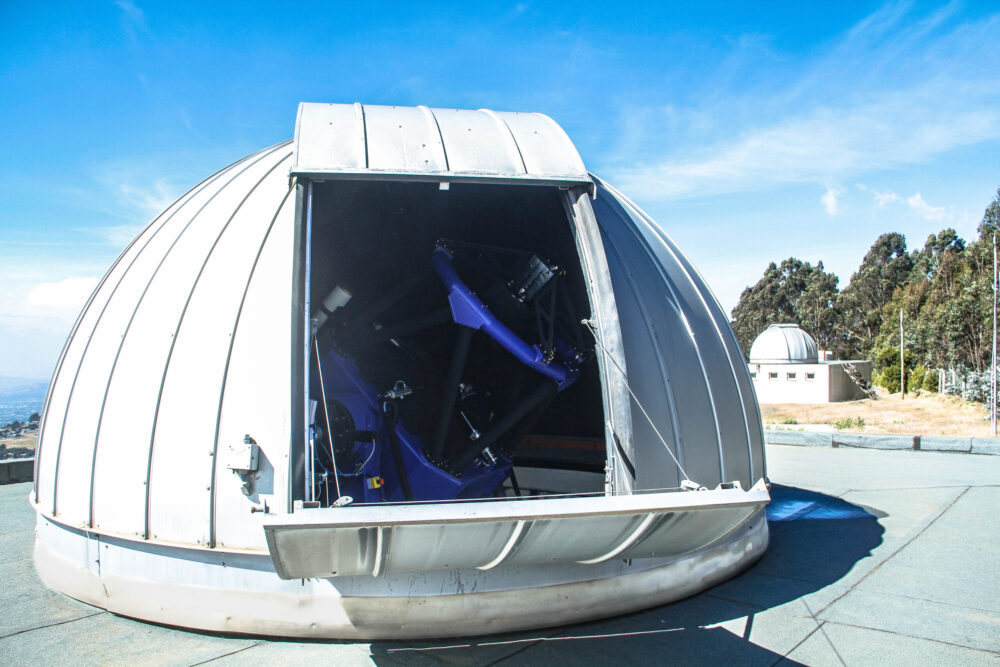
ESSS campaigned to establish Ethiopia’s first research-grade observatory, leading to the construction of the Entoto Observatory and Research Center in 2012. Initially managed as an institutional consortium, the observatory was later handed over to the government when it established the Ethiopian Space Science and Technology Institute (ESSTI, now part of the Space Science and Geospatial Institute).
ESSS also contributed to the drafting of Ethiopia’s National Space Policy. Today, the Society continues its work to build public awareness, enhance local research capacity, advocate for scientific infrastructure, and foster international collaborations.
What are the main activities of the Ethiopian Space Science Society?
We organize our core activities around four main areas.
First, we focus on science popularization and public outreach to make space science accessible to the public. Second, we work on capacity building and education by training students, empowering educators, and supporting academic curricula. Third, we provide research support and infrastructure development, which involves facilitating opportunities for local researchers and supporting facilities like observatories. Finally, we engage in science diplomacy, policy, and international collaboration, advising on national frameworks and building connections with global space organizations.
While all these areas require our attention, ESSS is particularly known for its grassroots outreach initiatives. By investing in educating students and informing citizens, science shifts from being perceived as a luxury to being recognized as a necessity for progress.
Science communication and science education are crucual to the Ethiopian Space Science Society’s mission. Tell us more about it…
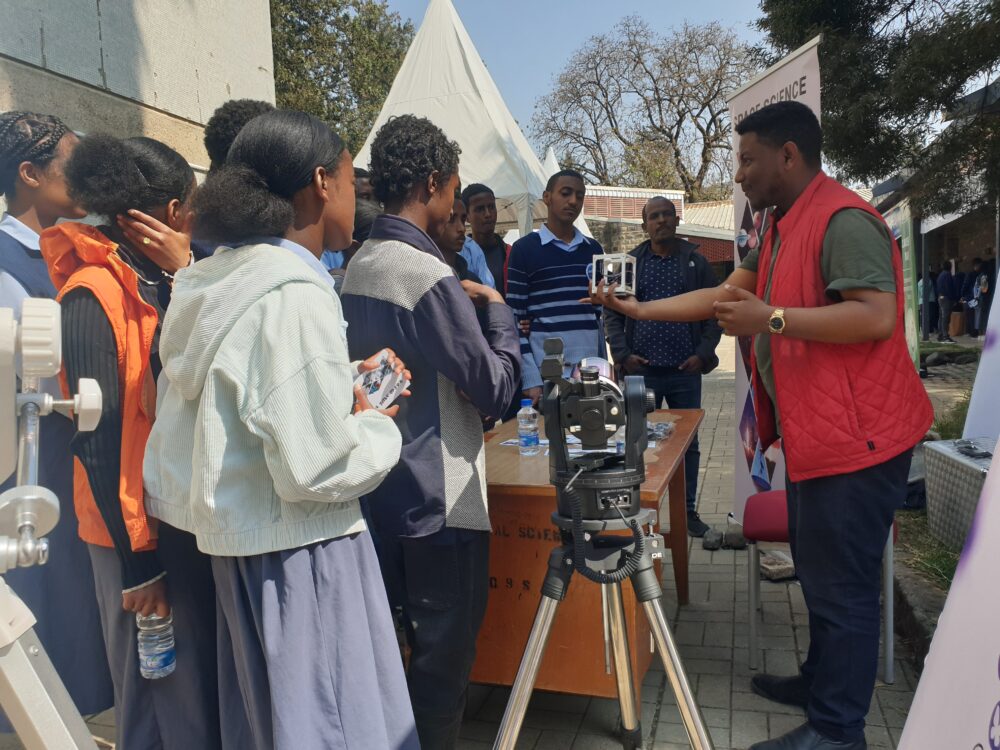
Indeed, these are core functions of our society. We design platforms to make scientific concepts accessible to the public, ranging from social and digital media to public lectures, stargazing nights, and community outreach. Our work is focused on demystifying astronomy and making scientific knowledge accessible in Ethiopia.
To achieve this, we operate through a network of over 31 regional branches and institutional partnerships. We work directly with primary and secondary schools to establish and support space science clubs, ensuring that youth have opportunities to explore science early in life.
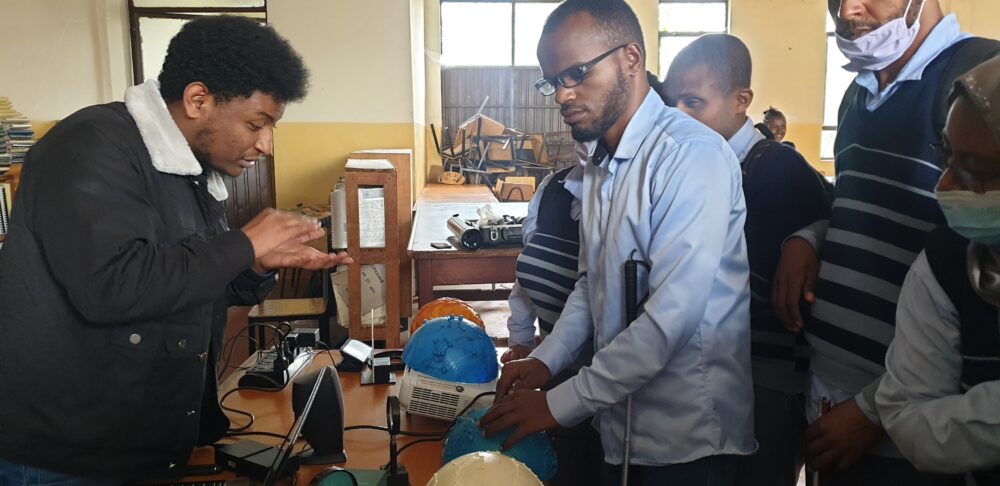
In terms of formal capacity building, ESSS regularly organizes technical workshops, practical training sessions, and seminars for university students and early career professionals. We have also built a mentorship network that connects young Ethiopian talent with international scholarships, research grants, and global space networks.
What’s a typical day working as ESSS director?
Because ESSS operates with a small core team, my role involves overlapping responsibilities. Most of my work focuses on strategic planning, stakeholder coordination, and expanding our institutional partnerships. As a non-profit organisation, a significant portion of my time is dedicated to resource mobilization and fundraising, a task that has become increasingly challenging in the current economic climate.
To create new engagement channels and build organisational sustainability, we have expanded our digital footprint by launching an official media blog, educational portals, and a merchandise store. I oversee the performance and development of these platforms alongside our technical team.
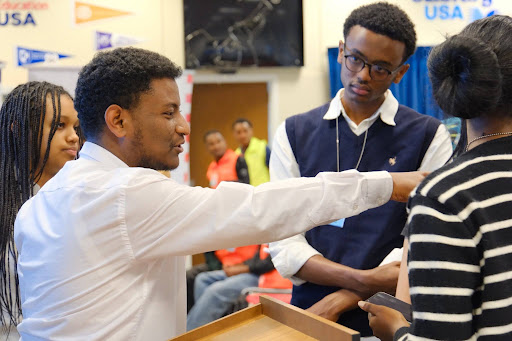
Whenever possible, I take part in outreach activities, acting as a sky guide during public stargazing events, facilitating student workshops, or delivering lectures at local schools. Staying involved in outreach keeps me connected to our primary goals.
Wow, that’s a very busy schedule. And on top of that, you are also involved in the International Astronomical Union’s network for astronomy communication as National Outreach Coordinator (NOC) for Ethiopia. How would you describe this experience?
Serving within the IAU Office for Astronomy Outreach, first as Deputy National Outreach Coordinator and later as NOC, has been a valuable experience. The NOC network provides a platform where astronomy communicators exchange ideas, pool resources, and collaborate on worldwide campaigns. It has allowed us to elevate Ethiopia’s space initiatives onto the global stage while bringing international expertise back home.
Did you participate in any global projects as part of this network?
We have participated in several global initiatives, including 100 Hours of Astronomy, Telescopes for All, and global exoplanet naming initiatives. One notable project was the IAU NameExoWorlds campaign. What began as a science outreach project grew into a national initiative. We organized public voting and educational campaigns across the country, uniting citizens, scientists, and government institutions. It culminated in Ethiopia officially naming a confirmed exoplanet and its host star, generating significant public and scientific interest.
What do you think contributed to making this project a success?
Collaboration and community involvement are key factors in our success. When a project is co-created with local schools, regional branches, universities, and civil society groups, it fosters a sense of cooperation.
Furthermore, designing initiatives that reach beyond major urban centers into rural and underserved communities ensures inclusivity. When people see their local culture and youth represented in a national scientific endeavor, it helps a project reach a wider audience.
Co-creation and reaching into underserved communities are also at the core of Street Galaxy, a collaboration you joined recently together with the IAU NOCs from Italy and Brazil. Let’s talk about this project…
Street Galaxy is an international initiative that combines astronomy communication with art. It invites youth, particularly students from disadvantaged backgrounds, to explore astronomical concepts and express their understanding of science through street art and murals.
Historically, art has been a useful tool for communicating ideas and cultural narratives. By merging art with space science, the project aims to bypass academic language barriers, giving young people a platform to express their understanding of science and engage with their local communities.
What would you say are the major challenges for a science communicator today, in Ethiopia?
The main challenges we face locally include addressing the perception that space science is a luxury rather than a useful tool for areas like economic development, agriculture, navigation, and environmental monitoring. There is also a gap in public understanding regarding how space technologies directly impact daily life, such as satellite communications, weather forecasting, and disaster management.
Additionally, we work to address misconceptions and pseudoscience through evidence-based education. Finally, limited financial support and structural investment dedicated to science communication and public engagement initiatives remain an ongoing constraint.
And globally? Do you think the challenges your international colleagues experience are different from those you experience locally?
At a fundamental level, science communicators worldwide face similar core challenges, bridging the gap between scientific realities and the general public. Misinformation, pseudoscience, and the struggle for adequate funding are common issues.
However, the specific context varies. In secular societies, pseudoscience might take different forms than in largely religious communities. Science communication requires an approach that is mindful of the local cultural context while promoting rational inquiry. Understanding these nuances is necessary to communicate effectively.
What are the most exciting and most difficult parts of your job?
The most difficult part of my job is often the most rewarding, explaining scientific concepts in a simple and relatable manner.
Engaging with a diverse audience from different backgrounds and age groups is challenging. However, seeing a student look through a telescope for the first time, or realizing how satellites help monitor crops, makes the work worthwhile. Sharing an interest in space with others is a positive experience.
Finally, are there any authors, books, people or special events that influenced you along your journey?
My first encounter with astronomy was through a book titled “What the Telescope Tells Us” by Pavel Klushantsev, which had been translated into Amharic by Ge’ezan Yemane. As a junior high-school student, I appreciated its illustrations and the stories bridging mythology with planetary science.
A few years later, I attended an ESSS public stargazing night and saw the rings of Saturn through a telescope for the first time. Seeing it through a telescope was a defining moment for me.
As I became more involved with ESSS, the former general manager, Ms. Beza Tesfaye, became my mentor. Her guidance and leadership played a role in helping me navigate my career and take on responsibilities within the space sector.




Add Comment